Casa em Maxial
Maxial, 2020

Casa em Maxial
Location: Maxial, Ansião
Programme: Renovation / New build
Type: Four-bedroom detached house
Area: 238.80m²
Year: 2020
Status: Built
Architecture: Cidade Branco Arquitectos
Engineering: Catarina Ferreira, Engineer
Construction: Lápis Engenharia – Construção
Photographs: David Pereira
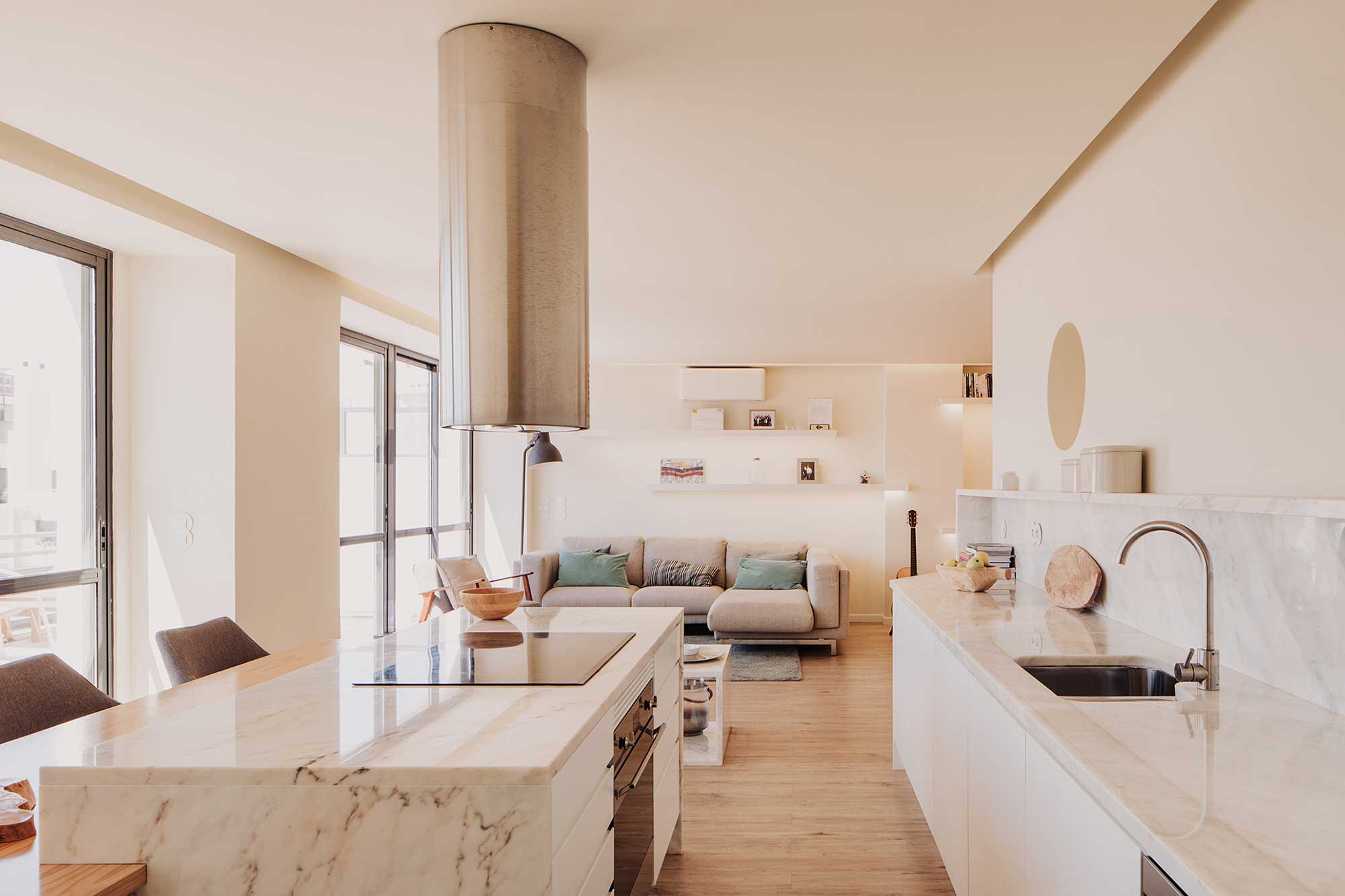
Nuno and Cláudia were expatriates, with jobs that allowed them to live anywhere in the world, as they were part of the team at the famous Cirque du Soleil company. It was through several meetings with very different time zones that we designed Maxial's house together with Nuno and Cláudia, which was the essential basis for the couple's return to Portugal and their homeland, where they intended to expand their family.
Maxial is a village in the municipality of Ansião, characterised by a sparse but consistent urban agglomeration, where the limestone of the area marks the architecture. The urban area is concentrated near the village's main road and is surrounded by forest and agricultural land. These characteristics are exactly what mark the land we are going to intervene in: we have a generous area of land, the perimeter is marked by a ruined limestone wall and the urban area (suitable for construction) is adjacent to the main road.

Claúdia and Nuno wanted a single-storey, three-bedroom house, with the kitchen as the heart of the home and a generous floor area. We built the house in an urban area which, after complying with legislation, namely mandatory distances from the street axis, limited us to a possible location that coincided with a rocky outcrop. Our principle was to respect the land: the flora, which was marked by oak and olive trees and these rocky outcrops, so the house is designed in such a way that the intervention in the land is minimal and that, at the end of the work, we could continue to enjoy the natural beauty of the land.
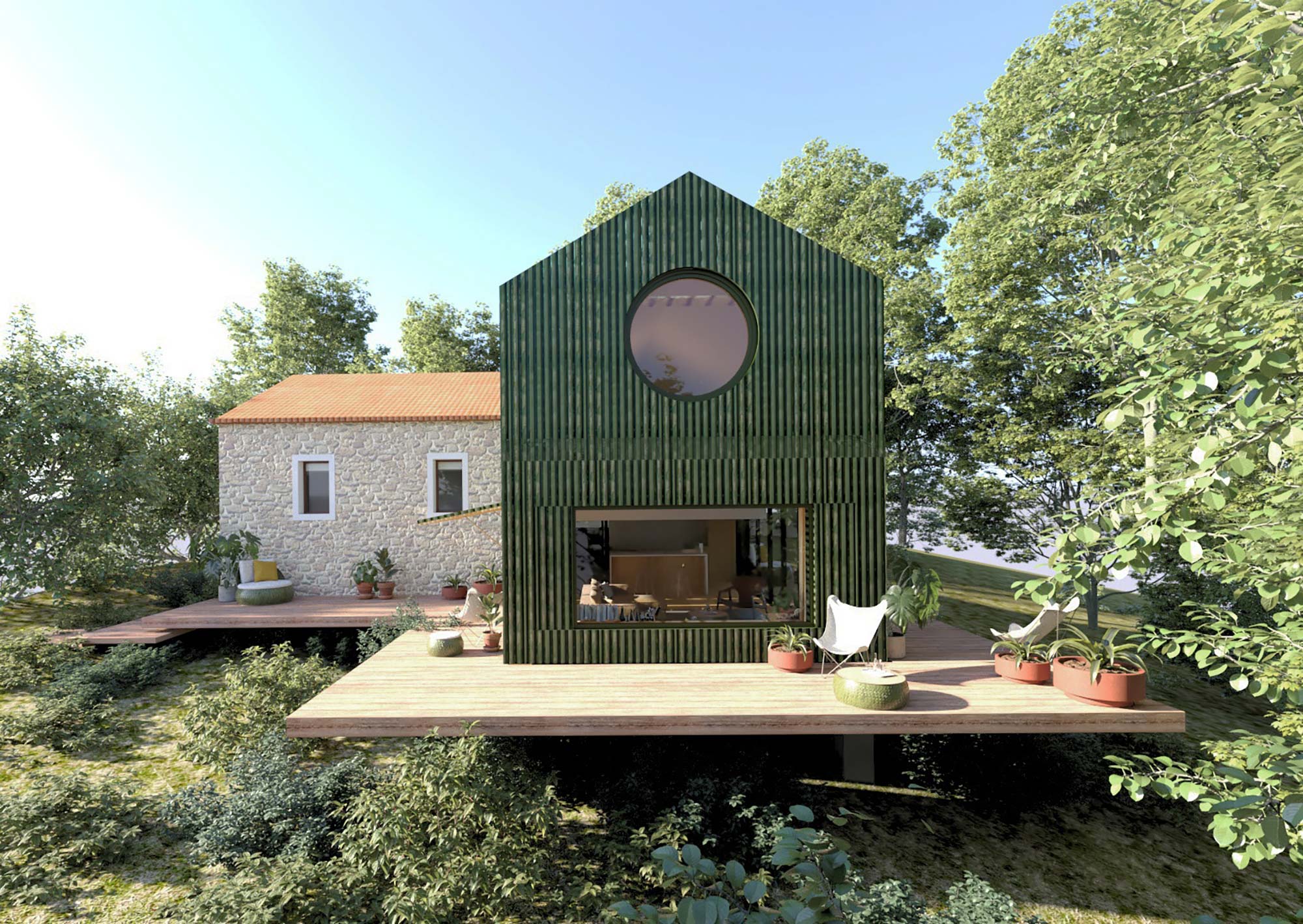
The house is designed parallel to the axis of the main road, forming an ‘L’ shape in plan, where the living room is at a lower level than the rest of the house, so that the house follows the unevenness of the terrain. The aim is to create a volume that does not stand out on the street, so the house turns its ‘back’ to the street and opens up to the land, and the single-pitched roof follows the unevenness of the land, in an attempt to ensure that the volume does not conflict with the natural morphology of the land. The house has a generous air space, to breathe and ventilate, and at the same time give the impression that the house does not sit heavily on the terrain, appearing to be suspended above the rocky outcrop.
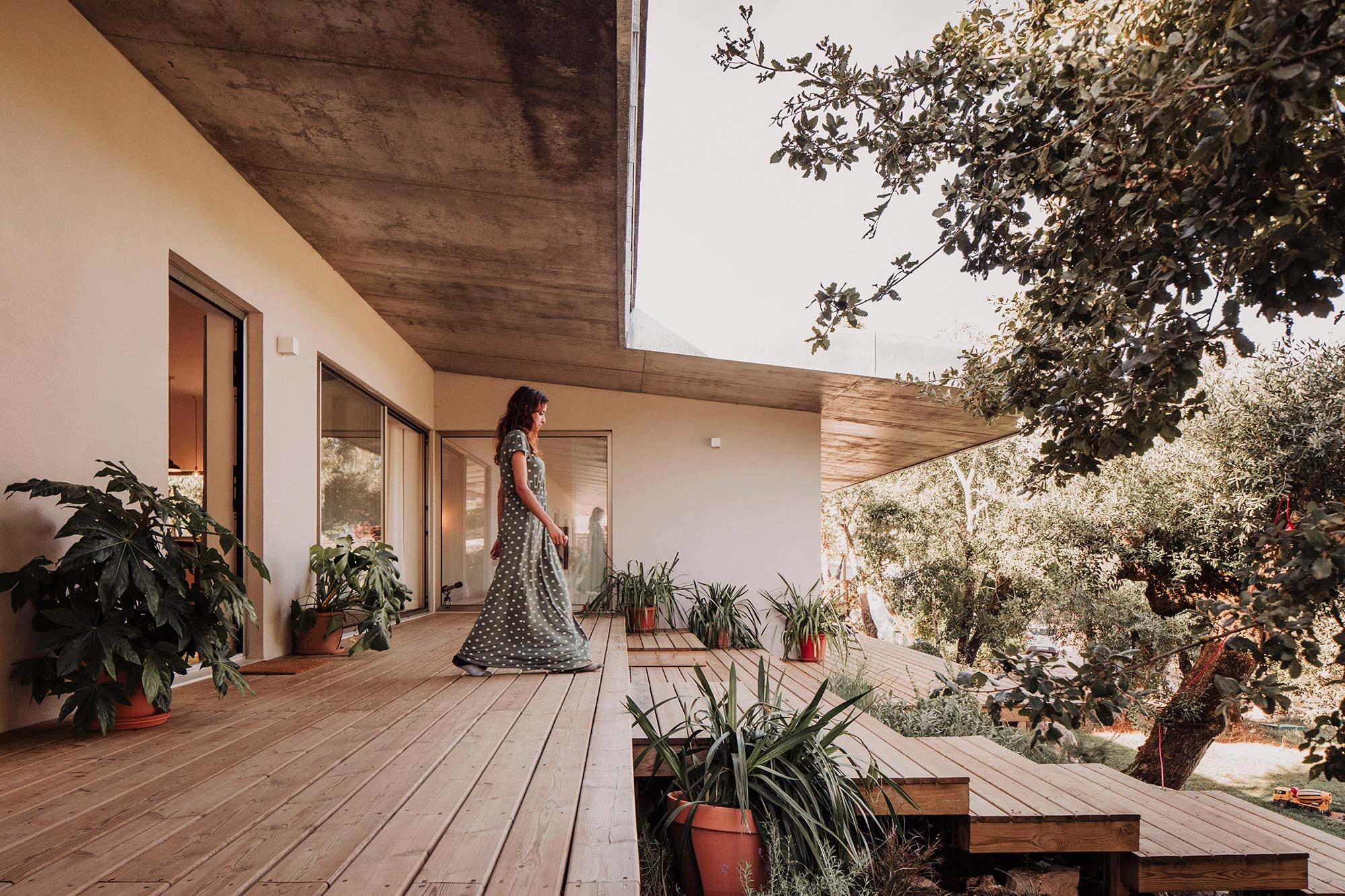
The relationship with the terrain is marked by generous spans, the main elevation faces inwards and does not conflict with the urban context. This same elevation is marked by a wooden deck platform that follows the unevenness of the house and relates to the exterior. Aligned with this platform is a canopy that is a continuation of the house's roof. The canopy was designed to allow natural light to enter during the winter months and to create shade during the summer months, a situation verified after construction, bringing controlled and comfortable temperatures to the house.

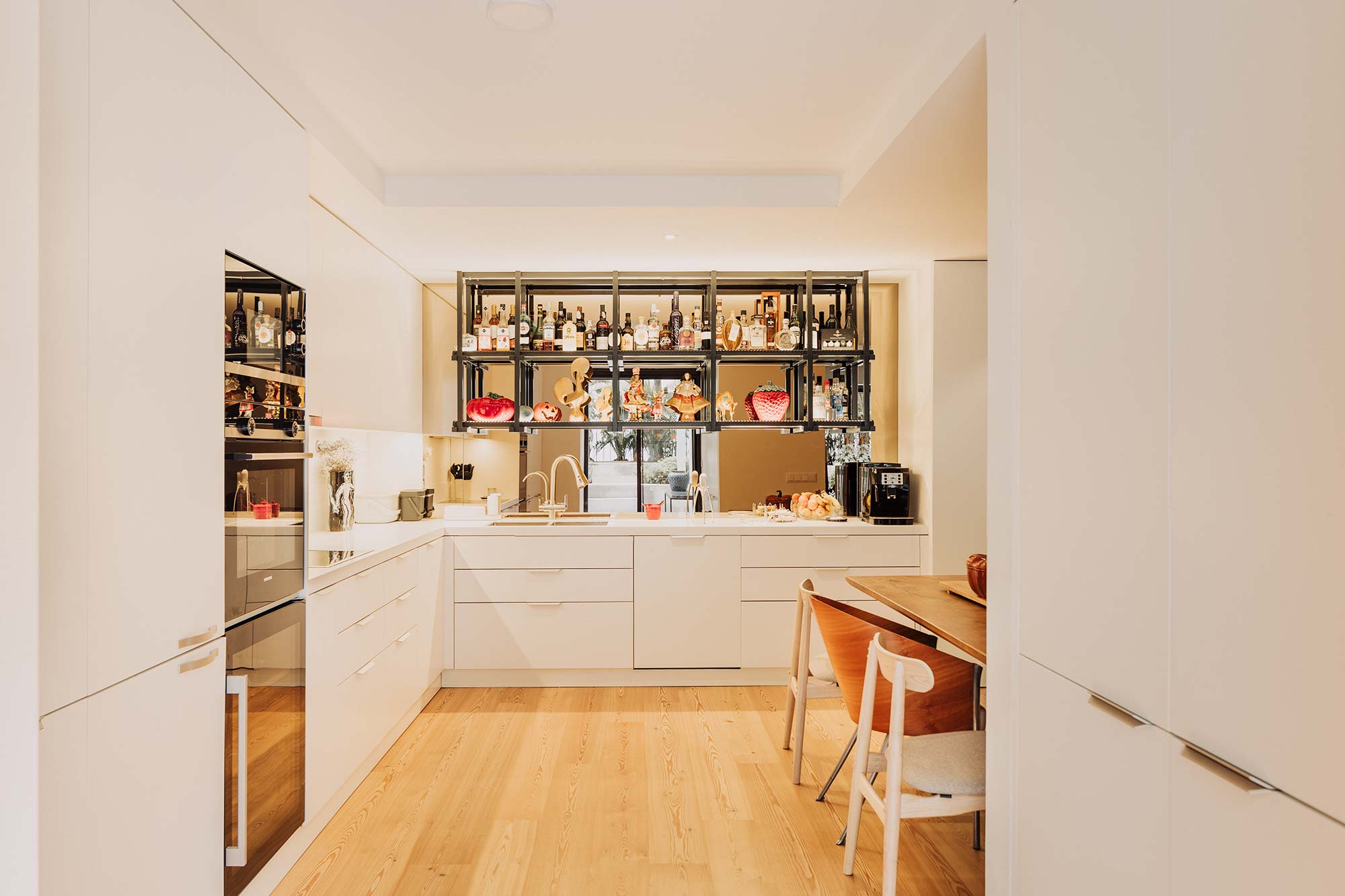
In summary, we have a single-storey house that attempts to blend into the terrain through a simple volume that follows the morphology of the land. The entire house faces the interior of the plot, where the deck platform creates a transition zone between the interior and exterior, and between the outdoor dining area connected to the indoor kitchen and the outdoor kitchen equipped with a wood-burning oven. The house sits delicately on the land and when we are inside we are always relating to the land that is part of the landscape and enters the interior of the house through the generous openings. The materials of choice are wood for the floors, handmade tiles in the kitchen and bathrooms, a zinc roof and the boundary wall that was rebuilt with limestone taken from the land itself.
This project underwent an interesting evolution and several changes, even reaching two floors at one point. After much study, questioning, and budget adjustments, we firmly believe that the version that was ultimately built was the best version of all those designed, with all those involved sharing responsibility for this success, namely the engineering team, builders, and customers.
This was the first house we designed from scratch – a new build – rather than a renovation. We would like to thank Claúdia and Nuno for placing their trust in us. They now live in the house with their two children.
Image Gallery