Casa dos Correios
Luso, 2024
Casa dos Correios
Location: Luso, Mealhada
Programme: Housing / Renovation
Type: Three-bedroom single-family home
Area: 240.50 m²
Year: 2024
Status: Built
Architecture: Cidade Branco Arquitectos
Construction: Vitor Manuel Santos Cruz
Engineering: Catarina Ferreira, Engineer
Photographs: David Pereira
This house is the result of the renovation of a 19th-century building, which was once the post office in the village of Luso. Its main use was for services, but it also contained living quarters for the local postmaster (CTT). The building was characterised by its partition wall construction and striking carpentry details, and was equipped with an air gap (air box) that protected it from moisture and helped to preserve the original woodwork.
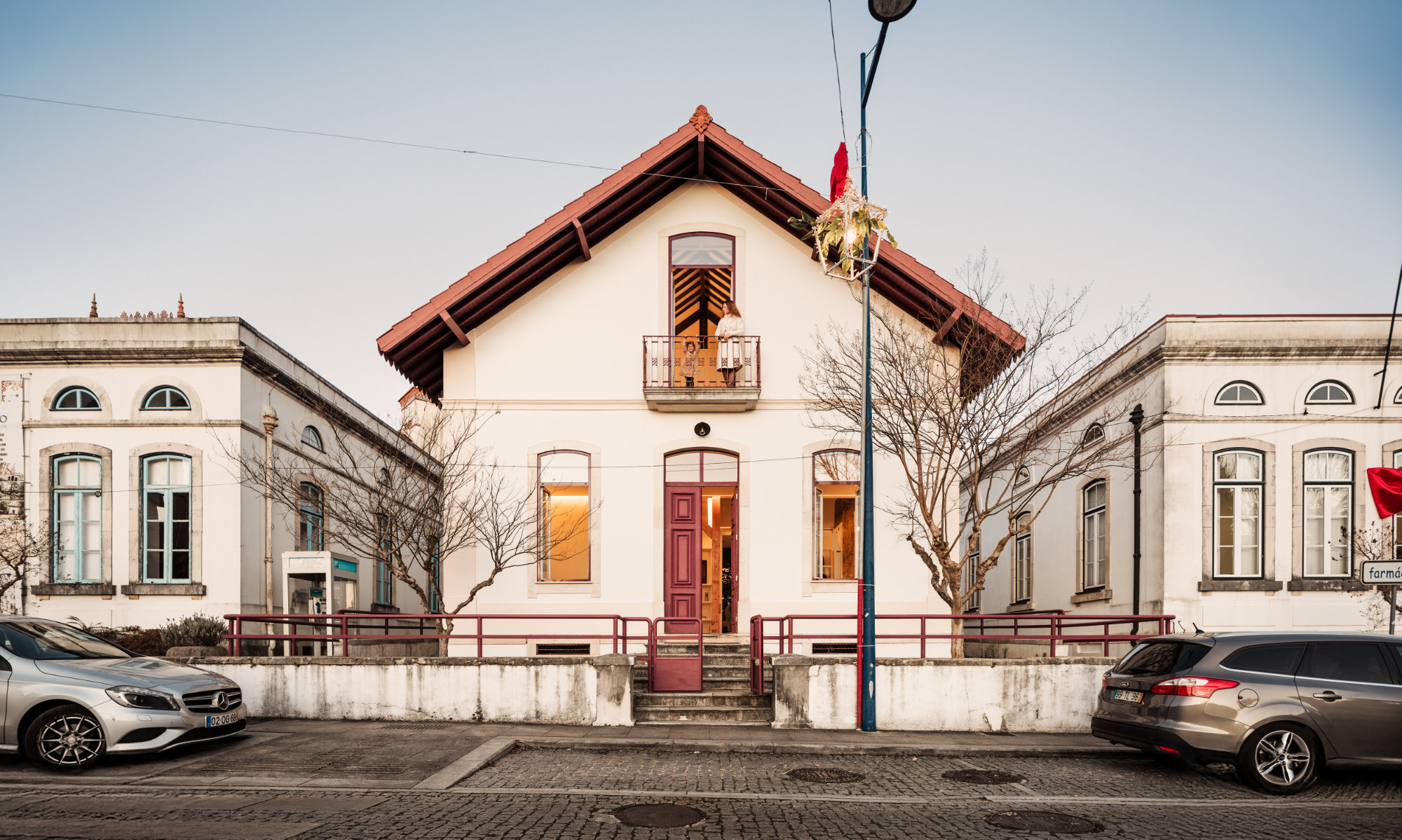
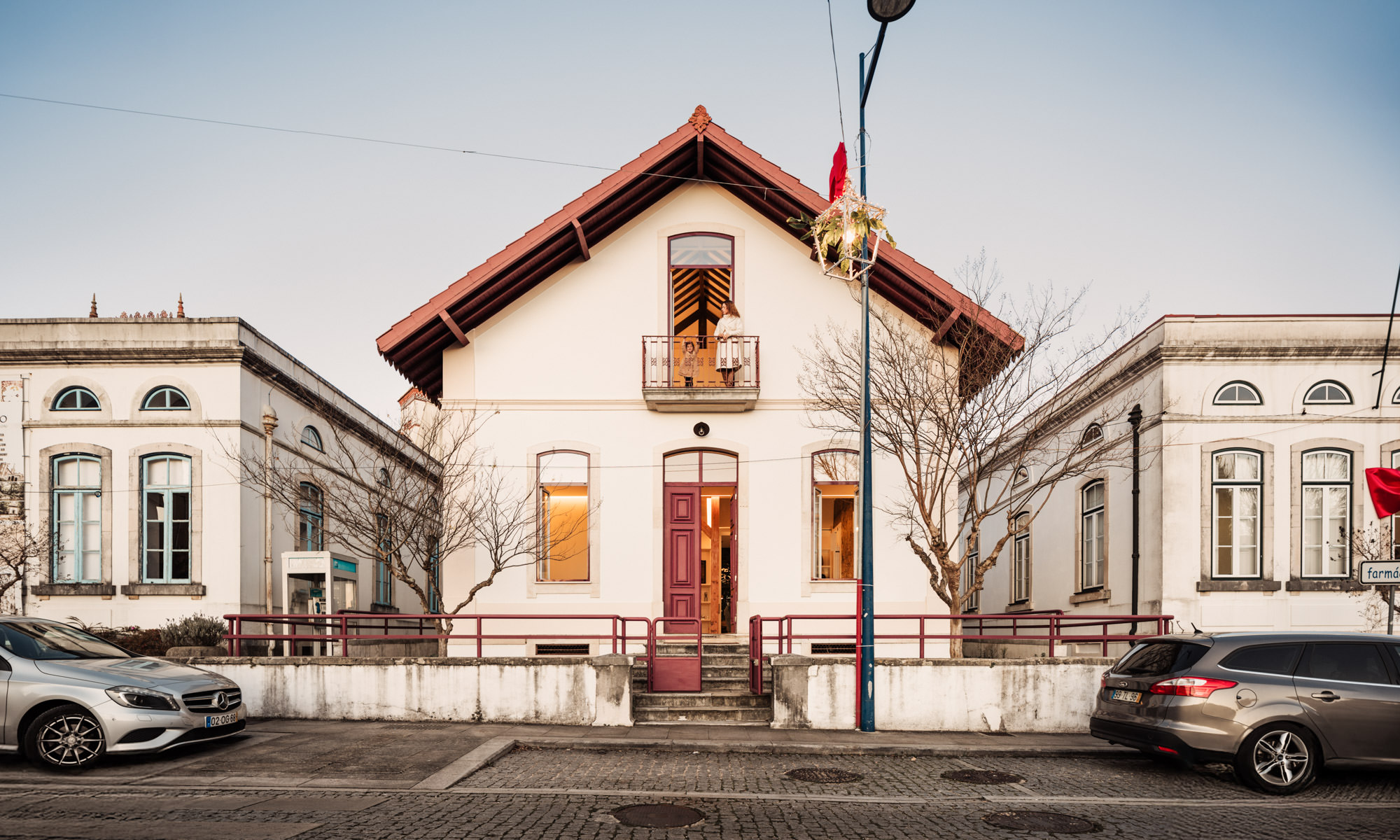
The building has a simple, traditional façade and marks the main axis of this village, creating symmetry between two other public buildings (the parish council and the tourist office). In order not to detract from the characteristic entrance that marks it, and to transform a building that was public into a private one, it was decided to continue the design of the surrounding fence, and inspired by this, we designed the gate that we wanted to look as if it had always been there.
It is respect for the building and, in a way, fascination with its details that dictates the project's strategy. On the outside, the changes are minimal and the building's image remains the same, now with a ‘facelift’. The design of the window frames has been simplified in order to increase the glass area and allow more natural light in.

It is inside, through a single gesture, that the entire project ultimately comes together. By creating a void in the centre of the floor plan, a double-height area that generously connects the two floors and brings a new sense of space. This gesture helps us to highlight the carpentry details that the building already had, namely the wooden trusses that support the roof, which were hidden by a false ceiling that we chose to remove. Through the void created, they now form part of the various spaces. This void also brings thermal benefits, creating the so-called ‘chimney effect’ that helps with the natural ventilation of the space, its cooling and also its heating, as less equipment is needed to heat the house.
The house is built around this void, where, on the ground floor, we enter a large space with different social areas, namely a living room, reading room, dining room and kitchen, and where we also have an accessible bedroom. On the first floor, the void divides the floor plan and ‘gives us’ a suite on each side symmetrically, leaving space for an open office area that connects to the double-height area. In both suites, the door to the bathroom is camouflaged in the wardrobe doors, hiding access to the bathroom.

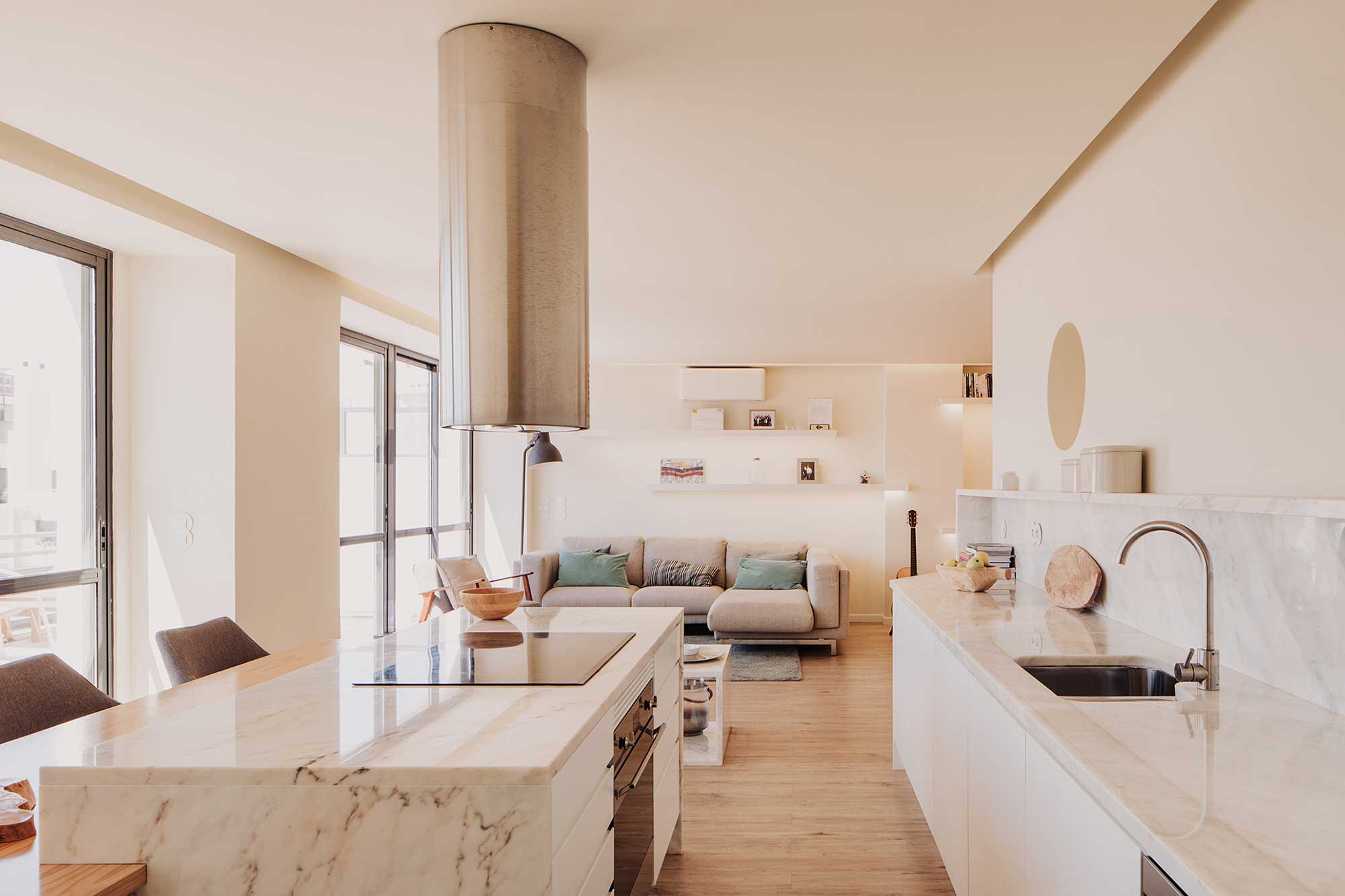
The woodwork, namely the skirting boards, shutters and staircase banister, underwent meticulous restoration, creating an environment characterised by natural wood tones and white linen walls. We deliberately introduced colour through the use of bottle green tiles in the kitchen, which add contrast, colour and brightness. We also highlight the use of Extremoz marble stone in the bathrooms, laid in a ‘book’ pattern, and on the kitchen island worktop.
A project that, above all, sought to capitalise on and highlight the beauty that the building itself already possessed.
Image Gallery